






NHS dental charges are set nationally, so you pay the same at every NHS dental practice in England. The charge you pay depends on the treatment you need to keep your mouth, gums, and teeth healthy. You only ever pay one charge for each complete course of treatment, even if you need multiple visits.
NHS dental treatment is organised into three bands. You pay one charge for each complete course of treatment, regardless of how many appointments are needed to finish it.
Current NHS dental charges (2024/25):
Band | Cost | What’s Included |
Band 1 | £26.80 | Examination, diagnosis (including X-rays), advice on preventing future problems, scale and polish if needed, application of fluoride varnish or fissure sealant. Urgent care also falls under Band 1, even if multiple appointments are needed. |
Band 2 | £73.50 | Everything in Band 1, plus fillings, root canal treatment, tooth extractions, and any other treatment to relieve pain or restore function. |
Band 3 | £319.10 | Everything in Bands 1 and 2, plus crowns, dentures, bridges, and other complex restorative work. |
One charge per course of treatment: If your dentist starts treatment that’s covered by Band 2 (for example, a filling), you pay £73.50. If during that same course of treatment additional Band 2 work is needed (like another filling or an extraction), you don’t pay again. The single £73.50 charge covers all necessary Band 2 treatment until the course is complete.
Treatment courses last two months from your first appointment or 12 months if your treatment plan includes dentures, crowns, or bridges. Any treatment completed within this period is covered by your single band charge.
This is your routine check-up band. It covers everything needed to examine your mouth, diagnose problems, and keep your teeth clean and healthy.
What’s included: Clinical examination to check teeth, gums, and soft tissues. X-rays if clinically necessary to diagnose problems. Oral cancer screening. Treatment plan and advice on preventing future problems. Scale and polish (hygiene cleaning) if needed. Fluoride varnish application (usually for children). Fissure sealants to protect teeth from decay.
Urgent care: If you have a dental emergency (severe pain, infection, trauma), emergency assessment and temporary treatment to relieve pain falls under Band 1, even if multiple appointments are needed to stabilise the problem before definitive treatment.
This band covers routine restorative work needed to treat decay, infection, or damage.
What’s included: Everything in Band 1, plus white or silver fillings, root canal treatment to save infected teeth, tooth extractions (simple or surgical), other work to relieve pain or restore basic function.
Example: You attend for a check-up (Band 1 exam) and your dentist finds two cavities needing fillings. Once treatment starts, you move to Band 2. You pay £73.50 once, which covers the examination, X-rays if needed, and both fillings.
This band covers complex restorative work to rebuild or replace teeth.
What’s included: Everything in Bands 1 and 2, plus crowns to strengthen damaged teeth, bridges to replace missing teeth, complete or partial dentures, inlays and onlays, other laboratory-made restorations.
Example: You need a crown on a cracked tooth plus two fillings. You pay £319.10 once, which covers examination, X-rays, the crown, both fillings, and all appointments needed to complete this work (typically 2-4 visits over several weeks).
Copy: Many people qualify for free NHS dental treatment. If you’re eligible, you pay nothing for any NHS dental work regardless of the band.
You qualify for free NHS dental treatment if you are:
Children’s NHS dental care: All routine dental care for children under 18 is free on the NHS. This includes check-ups, X-rays, fillings, extractions, fissure sealants, and orthodontic treatment if clinically necessary.
How to claim free treatment: You’ll need to show proof of eligibility (benefit award letter, maternity exemption certificate, HC2 certificate) when you attend appointments. Your dentist will provide the appropriate exemption form to complete.
Even if you don’t qualify for completely free treatment, you might get help with costs.
HC3 certificate (partial help): If you’re on a low income but don’t receive qualifying benefits, you may be eligible for an HC3 certificate providing partial help with NHS charges. This reduces what you pay, though you’ll still pay something.
NHS Low Income Scheme: Apply for help with health costs through the NHS Low Income Scheme if your income and savings are below certain levels. The scheme considers your circumstances including income, savings, and outgoings.
How to apply:
Call the NHS Help with Health Costs helpline on 0300 330 1343 for advice about eligibility and how to apply.
Complete form HC1 (available from NHS dental practices, Jobcentre Plus offices, or online at www.nhs.uk/healthcosts).
The assessment considers your household income, savings, and essential outgoings to determine if you qualify for full or partial help.
At A1 Dental Surgery, we offer both NHS and private dental treatment. Here’s how they differ.
Fixed national charges regardless of treatment complexity within each band. Uses clinically appropriate materials that meet NHS standards. Time allocated per appointment follows NHS guidelines. Limited cosmetic options (NHS focuses on clinical need, not aesthetics). Maximum cost £319.10 for any amount of Band 3 work.
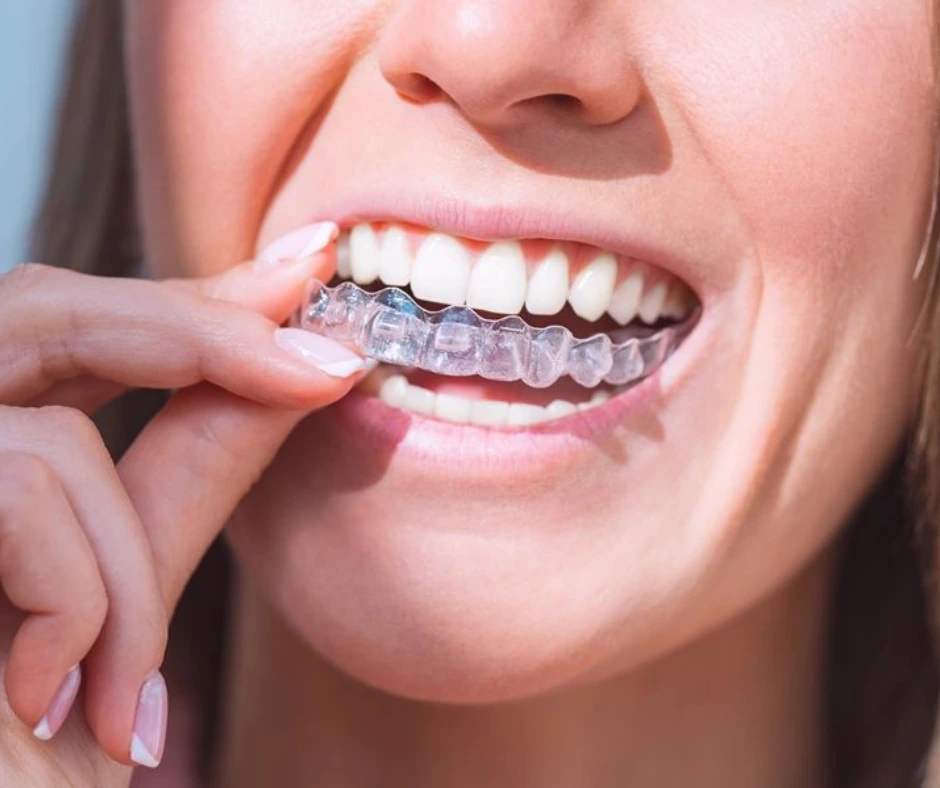
Costs vary based on specific treatment and complexity. Uses premium materials offering enhanced aesthetics and longevity. More appointment time allocated for complex cases. Full range of cosmetic options available (teeth whitening, aesthetic veneers, Invisalign). Advanced technology like CEREC same-day crowns. Costs can exceed £319.10 for complex work.
Yes, but not within the same course of treatment. You can have routine care on NHS, then choose private for specific treatments like cosmetic work or dental implants. Your dentist will explain when NHS and private options exist for your situation.
Example: You have an NHS check-up and filling (Band 2, £73.50). Six months later, you decide you want teeth whitening. Whitening isn’t available on NHS, so you’d pay privately (around £440) as a separate course of treatment.
See our Private Dental Fees page for full private treatment pricing.
We take the time to understand your medical history, assess your dental health, and create a treatment plan that works for your budget and timeline. Your smile is your story, and every story deserves individual attention.
Dr Banvir's MSc in Aesthetic & Restorative Dentistry represents specialist-level training you'd typically need referrals to access. His three years working in Maxillo-Facial Surgery means he's handled complex cases most general dentists never see.
Digital X-rays with minimal radiation. Intraoral cameras so you can see exactly what we're seeing. Comprehensive record-keeping that tracks changes over time. We invest in technology because it genuinely improves your experience and treatment outcomes.
Generations of Canterbury families have trusted us with their dental health. That kind of loyalty doesn't come from flashy marketing. It comes from delivering quality care consistently over decades.
Dental anxiety is far more common than you think. We work at your pace, explain everything before we begin, and create an environment where you feel in control. Many of our most nervous patients now attend regular check-ups without that familiar dread.
Looking for a dentist you can actually stick with?
Registering with A1 Dental means your care is planned properly, explained clearly, and delivered consistently over years. Not patched together across disconnected appointments at different practices.
Your first visit focuses on understanding your story. We assess your dental health, discuss your goals and concerns, and map out a realistic treatment plan that respects both your timeline and budget.
What registration means:
NHS charges are organised by treatment type, not quantity. Whether you need one filling or five fillings, you pay one Band 2 charge (£73.50) covering all restorative work needed during that course of treatment. This system actually benefits patients needing multiple treatments, as you're not charged separately for each procedure.
If additional treatment is needed within your course of treatment period (two months for routine work, 12 months for crowns/dentures/bridges), it's covered by your original charge. If treatment is needed after your course ends, a new course begins and you pay again. Your dentist will always explain before starting new treatment courses.
NHS dental implants are extremely limited and typically only provided in exceptional circumstances (severe facial trauma, congenital conditions, cancer treatment). Routine tooth replacement with implants isn't available on NHS. Most patients requiring implants need private treatment. See our Dental Implants page for private implant costs.
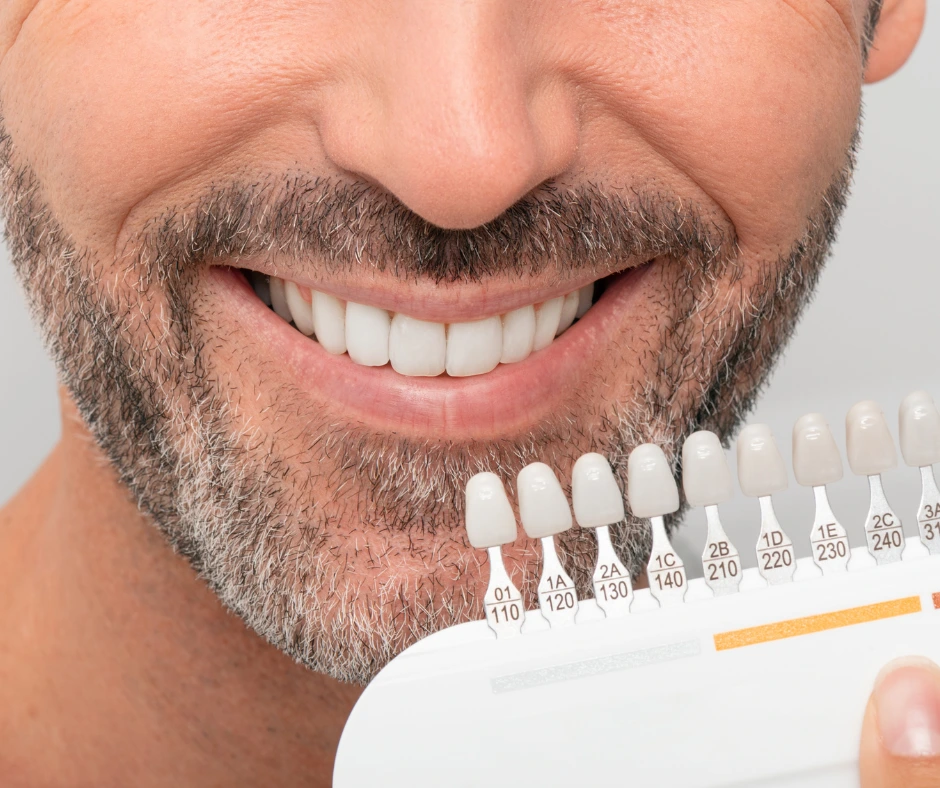
No. Teeth whitening is considered cosmetic treatment and isn't available on the NHS. It must be paid for privately (from £440). The same applies to cosmetic veneers, aesthetic orthodontics, and other treatments purely for appearance rather than clinical need.
Pregnant women qualify for free NHS dental treatment. You'll need a maternity exemption certificate (form FW8) from your midwife or GP. This covers all NHS dental treatment during pregnancy and for 12 months after birth, including urgent work, fillings, extractions, and even crowns if clinically necessary.
If treatment provided is unsatisfactory or fails prematurely (within 12 months), your dentist should provide remedial treatment at no additional charge as part of the original course. If you're unhappy with NHS treatment, speak to the practice first. If unresolved, contact NHS England to discuss the complaint process.
Age alone doesn't qualify you for free NHS treatment. However, many pensioners receive Pension Credit Guarantee Credit, which does provide free NHS dental care. If you're a pensioner not receiving qualifying benefits, you pay standard NHS charges unless you qualify through the Low Income Scheme.
Both fall under Band 1 (£26.80). Urgent treatment addresses problems causing pain, discomfort, or concern between routine check-ups. Emergency treatment deals with trauma, severe pain, or serious infections requiring immediate attention. Both are charged as Band 1, even if multiple appointments are needed to stabilise the problem.
NHS practices aren't required to offer payment plans for NHS charges due to the relatively low costs involved. However, if genuine financial hardship prevents you paying even NHS charges, speak to reception. We may be able to arrange something in exceptional circumstances, or help you apply for the Low Income Scheme for cost assistance.
NHS fees are subsidised by the government. The practice receives additional payment from NHS England on top of your patient charge. Private fees reflect the actual cost of providing treatment including dentist time, materials, laboratory work, and practice overheads. Private treatment also typically uses premium materials and allows more appointment time per procedure.
Our practice is centrally located on London Road in Canterbury (near Canterbury East Station with on-site parking and free parking on Temple Road), making NHS dental appointments convenient whether you're local or travelling from Deal, Dover, or Ramsgate.