
Tooth decay doesn’t heal on its own. At A1 Dental Surgery, we use tooth-coloured composite fillings that blend seamlessly with your natural teeth, restoring function and appearance in a single appointment.
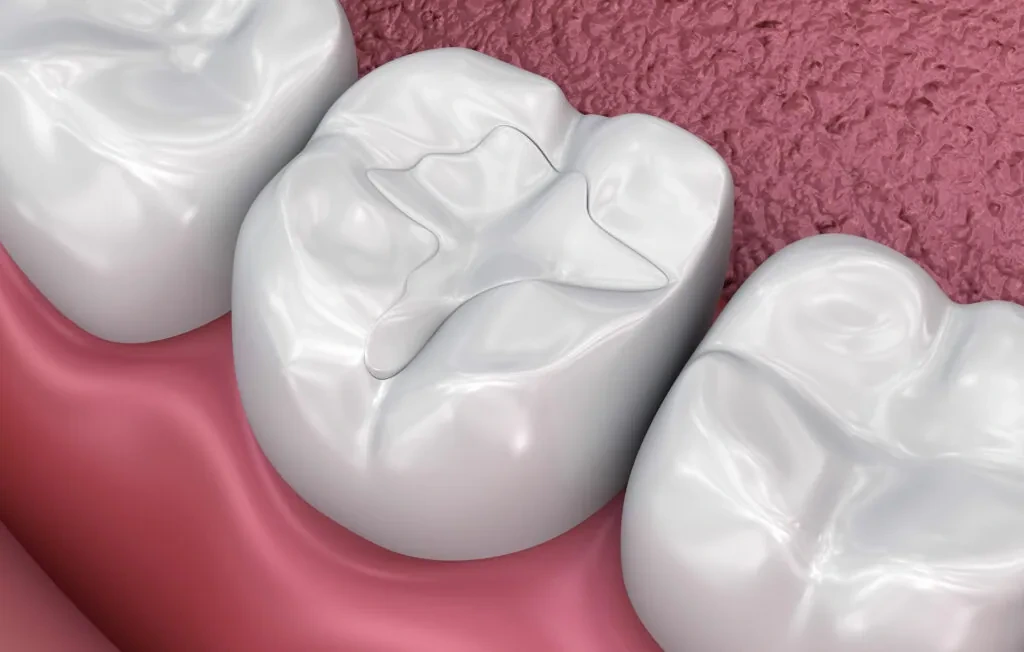
Dental fillings repair teeth damaged by decay (cavities). At our Canterbury practice on London Road, we remove the decayed portion of the tooth, clean the affected area, and fill the cavity with tooth-coloured composite material that blends with your natural teeth.
Modern white fillings look natural, bond directly to tooth structure, and typically last 5-10 years or longer with proper care. The procedure is completed in one appointment under local anaesthetic. Fillings prevent decay from progressing deeper into the tooth, which could eventually require root canal treatment or extraction if left untreated.
Tooth decay is one of the most common health problems in the UK, and it doesn’t heal on its own. Once bacteria create a cavity in your tooth enamel, that hole will only get bigger without treatment.
Bacteria in your mouth feed on sugars and starches from food, producing acid. This acid attacks tooth enamel, gradually creating tiny holes. In early stages, you won’t feel anything. Decay is usually painless until it’s quite advanced.
As the cavity grows, it penetrates through enamel into the softer dentine layer beneath. Decay spreads faster in dentine, and the cavity grows larger inside the tooth than the small hole you might see on the surface. Eventually, decay reaches the pulp (nerve) inside your tooth, causing pain, sensitivity, and potentially an abscess.
Leaving decay untreated leads to increased pain (what starts as occasional sensitivity becomes constant aching), larger fillings needed, root canal treatment when decay reaches the nerve, tooth loss when teeth are too damaged to save, painful abscesses, and higher costs. Simple fillings are far less expensive than root canals, crowns, or implants.
Fillings stop decay from progressing and restore your tooth’s function and appearance. The earlier we catch cavities, the simpler and less expensive treatment becomes.
We primarily use tooth-coloured composite fillings at A1 Dental Surgery, though amalgam (silver) fillings remain available for specific situations.
Composite fillings are made from tooth-coloured resin that bonds chemically to tooth structure. They’re our preferred choice because they look natural (we shade-match to your natural teeth), preserve tooth structure (we only remove decayed portions), strengthen teeth (the bonding process reinforces remaining structure), and they’re mercury-free.
Composite limitations include slightly less durability than amalgam for very large cavities in back teeth, potential staining over time from tea or coffee, and being more technique-sensitive to place.
Amalgam has been used for over 150 years and remains the most durable filling material for large cavities in back teeth. It’s extremely durable (often lasting 15+ years) and very strong for large cavities in molars.
However, it’s highly visible with obvious silver colour, requires removing more tooth structure, can expand and contract with temperature (potentially cracking teeth over time), contains mercury (though research shows amalgam fillings are safe), and isn’t bonded to tooth structure.
We use amalgam when patients specifically request it, large cavities in back teeth need maximum durability, or clinical situations make composite placement difficult. Most patients choose composite for appearance and tooth preservation benefits.
Understanding the procedure helps you feel prepared. Here’s exactly what happens when you have a filling at our Canterbury practice.
The entire process typically takes 30-60 minutes depending on cavity size and location.
Your filling is completed in one appointment, but here’s what to expect afterwards.
Immediately after – Your anaesthetic will last 2-3 hours. During this time, avoid eating on the numb side (you could accidentally bite your cheek or tongue), be careful with hot drinks (you can’t feel temperature properly while numb), and wait until numbness wears off before eating if possible.
First 24 hours – Your tooth might feel sensitive to temperature, especially cold. This is normal and usually settles within a few days. The bite might feel slightly odd as you adjust to the new filling. Slight tenderness when biting is common and typically resolves within a week.
First week – Sensitivity should gradually decrease. If it worsens instead of improving, contact us. Avoid very hard foods on the filled tooth while you adjust. Continue brushing and flossing normally. Fillings need the same care as natural teeth.
When to contact us: Severe pain that doesn’t respond to painkillers, sensitivity that worsens instead of improving, a filling that feels very high or uncomfortable when biting, a sharp edge that irritates your tongue or cheek, or the filling falling out. These issues are rare but easily addressed if they occur.
Once you’ve had fillings, you understandably want to avoid needing more.
Brush twice daily with fluoride toothpaste for two minutes, paying special attention to the gum line where decay often starts.
Floss daily because 40% of tooth surfaces are between teeth where brushing can’t reach. Flossing removes food and plaque from these areas, preventing cavities between teeth.
Reduce sugar frequency. It’s not how much sugar you eat but how often. Constant snacking bathes your teeth in acid all day. Limit sugary foods and drinks to mealtimes.
Attend regular check-ups. Six-monthly examinations catch decay early when fillings are small and simple. Waiting until you have pain means larger, more complex treatment.
See the hygienist for professional cleaning that removes tartar and plaque contributing to decay, especially along the gum line.
Consider fluoride. If you’re prone to cavities, fluoride varnish applications strengthen enamel and reduce decay risk.
Private fillings: From £[price] depending on size and complexity. Small fillings cost less than large ones.
NHS fillings: £73.50 (Band 2 treatment for eligible patients). This covers as many fillings as you need in that course of treatment. If you need three fillings, you still pay £73.50 total, not per filling.
Call 01227 765 851 to book your appointment or discuss which option suits you best.
We take the time to understand your medical history, assess your dental health, and create a treatment plan that works for your budget and timeline. Your smile is your story, and every story deserves individual attention.
Dr Banvir's MSc in Aesthetic & Restorative Dentistry represents specialist-level training you'd typically need referrals to access. His three years working in Maxillo-Facial Surgery means he's handled complex cases most general dentists never see.
Digital X-rays with minimal radiation. Intraoral cameras so you can see exactly what we're seeing. Comprehensive record-keeping that tracks changes over time. We invest in technology because it genuinely improves your experience and treatment outcomes.
Generations of Canterbury families have trusted us with their dental health. That kind of loyalty doesn't come from flashy marketing. It comes from delivering quality care consistently over decades.
Dental anxiety is far more common than you think. We work at your pace, explain everything before we begin, and create an environment where you feel in control. Many of our most nervous patients now attend regular check-ups without that familiar dread.
Looking for a dentist you can actually stick with?
Registering with A1 Dental Surgery means your care is planned properly, explained clearly, and delivered consistently over years. Not patched together across disconnected appointments at different practices.
Your first visit focuses on understanding your story. We assess your dental health, discuss your goals and concerns, and map out a realistic treatment plan that respects both your timeline and budget.
What registration means:
No, fillings don't hurt because we use local anaesthetic to numb your tooth completely before starting. You'll feel pressure, vibration from the drill, and pushing sensations as we work, but you won't feel pain. If you do feel discomfort, raise your hand and we'll add more anaesthetic immediately.
After treatment, you might experience mild sensitivity for a few days as your tooth adjusts to the filling. This is normal and usually settles quickly. Over-the-counter painkillers help if needed.
The injection to numb your tooth involves a brief scratch, but modern techniques and fine needles make this much more comfortable than many people expect.
Composite fillings typically last 5-10 years, though many last considerably longer with good oral hygiene and regular check-ups. Factors affecting longevity include size and location of the filling (small fillings last longer than large ones), your bite and whether you grind your teeth, your oral hygiene and diet, and whether you attend regular check-ups where we monitor filling condition.
Amalgam fillings generally last longer (often 15+ years), which is why we sometimes recommend them for very large cavities in back teeth. However, composite durability has improved significantly, and most patients prefer the aesthetic benefits.
Private filling costs vary depending on size and complexity, from £[price range]. Small fillings cost less than large ones.
NHS fillings fall under Band 2 treatment, currently £73.50 for eligible patients. This covers as many fillings as you need in that course of treatment. If you need three fillings, you still pay £73.50 total, not per filling.
Call 01227 765 851 to book your appointment or discuss which option suits you best.
Wait until your anaesthetic wears off (2-3 hours) before eating to avoid accidentally biting your numb cheek or tongue. Once feeling returns, you can eat normally, though you might want to chew on the opposite side for the first day if your tooth feels slightly sensitive.
Composite fillings are fully set when you leave the practice. The curing light hardens them immediately. You don't need to wait for them to "dry" like old-fashioned fillings.
Mild sensitivity to temperature (especially cold) is common after fillings and usually resolves within a few days to two weeks. This happens because the tooth experienced trauma from decay and drilling, the pulp (nerve) inside may be slightly inflamed, deep fillings are closer to the nerve (causing more sensitivity), and your tooth needs time to adjust to the new filling.
Use toothpaste for sensitive teeth and avoid extremely hot or cold foods for a few days. Sensitivity should gradually improve. If it worsens or becomes severe, contact us. This might indicate the filling needs adjusting or the pulp requires additional treatment.
If you need several fillings, we can often treat multiple teeth in one appointment, depending on their location. Treating two fillings on the same side means numbing once and completing both in 60-90 minutes.
If you need many fillings, we might recommend splitting treatment across two or three appointments so you're not numb for hours. We'll discuss the most efficient and comfortable approach for your situation.
Fillings occasionally fall out, though this is uncommon with properly placed modern fillings. Reasons fillings fail include very large fillings with insufficient remaining tooth structure, biting something very hard, new decay developing around the filling edges, teeth grinding putting excessive force on fillings, or poor bonding if the tooth couldn't be kept dry during placement.
If a filling falls out, call us immediately on 01227 765 851. The exposed tooth is vulnerable to further decay and sensitivity. We'll see you quickly to replace the filling.
Modern composite fillings are strong enough for most situations, including molars that experience heavy chewing forces. They're actually stronger than enamel itself when properly bonded.
However, amalgam remains slightly more durable for very large fillings in back teeth. If you have a huge cavity requiring a large filling, we might recommend amalgam for maximum longevity, or we might suggest a crown instead, which covers and protects the entire tooth.
For small to moderate cavities, composite performs excellently and offers aesthetic and tooth-preservation advantages over amalgam.
Tooth pain can indicate a cavity, but it can also result from gum disease, a cracked tooth, sensitivity, or other issues. If you're experiencing tooth pain, don't wait. Call us on 01227 765 851 for an examination.
We reserve same-day emergency slots for severe tooth pain. Our practice is centrally located on London Road in Canterbury (near Canterbury East Station with on-site parking), making us easily accessible when you're in discomfort, whether you're local or travelling from Deal, Dover, or Ramsgate.
Yes, children can have white composite fillings just like adults. In fact, white fillings are often preferable for children because they're more conservative (removing less tooth structure) and look natural.
Children's dental treatment is free on the NHS for those under 18 (or under 19 in full-time education), which includes white fillings when clinically appropriate.
Regular check-ups from a young age help us catch decay early when fillings are small and simple. Many of our adult patients started coming here as children and now bring their own families.