
Fixed braces remain the most effective way to correct complex orthodontic problems, from severe crowding to significant bite issues. Whilst they’re more visible than clear aligners, they deliver predictable results for cases that Invisalign can’t treat, and they work whether you remember to wear them or not.
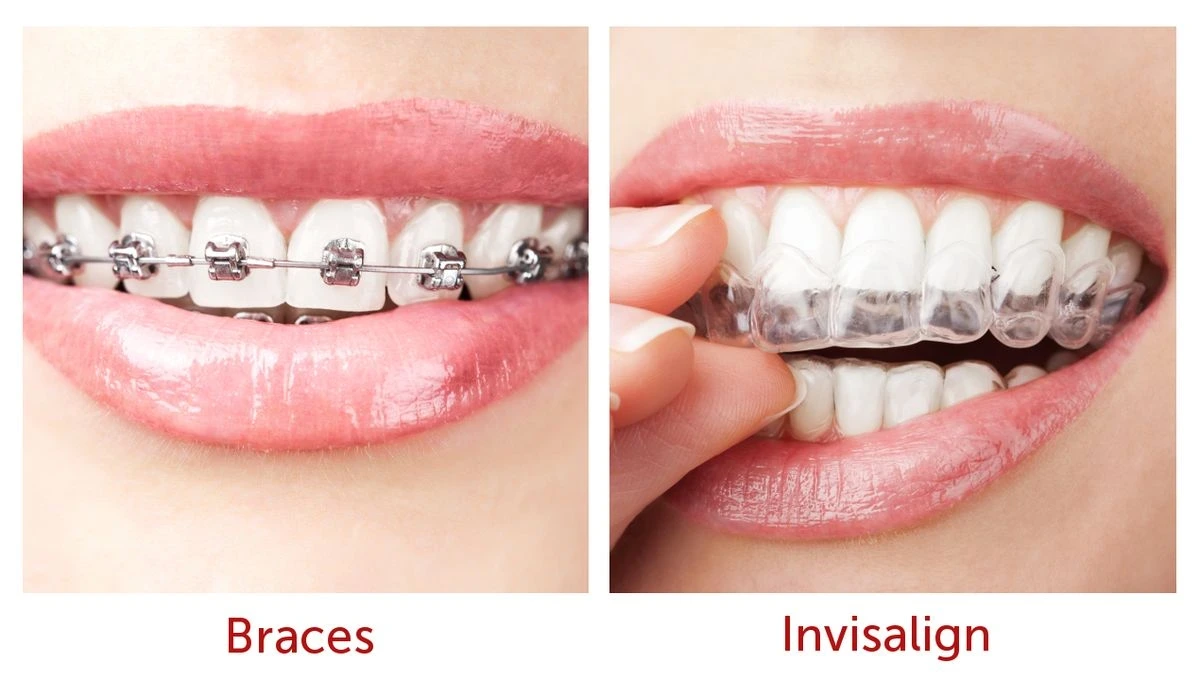
Fixed braces consist of small brackets bonded to each tooth, connected by a wire that runs through them. The wire applies gentle, continuous pressure that gradually moves teeth into their correct positions over 12-24 months.
“Fixed” means they’re attached permanently to your teeth for the duration of treatment. You can’t remove them yourself. Your orthodontist adjusts the wire tension every 4-6 weeks, progressively guiding teeth towards their final positions.
We offer two types at our Canterbury practice on London Road:
Metal braces: Traditional stainless steel brackets and wires. The most visible option but also the most durable and cost-effective.
Ceramic braces: Tooth-coloured brackets that blend with your natural teeth, making them less noticeable. They work identically to metal braces but with improved aesthetics.
Both options deliver excellent results for even the most complex orthodontic cases.
Patients choose fixed braces when they have orthodontic issues too complex for clear aligners, or when they want the most reliable treatment regardless of appearance.
Severe crowding: Your teeth are significantly overlapped, twisted, or pushed out of the arch. There’s insufficient space for all teeth to fit properly. Invisalign struggles with severe crowding. Braces handle it predictably.
Complex bite problems: Your upper and lower jaws don’t align properly, causing overbite, underbite, or crossbite that affects chewing and jaw function. Braces can correct even significant bite discrepancies.
Teeth that need rotating: Some teeth are rotated 90 degrees or more. Rotating teeth is one of orthodontics’ most challenging movements. Braces excel at this when clear aligners often struggle.
Severely protruding teeth: Your front teeth stick out significantly, affecting your profile and increasing injury risk. Braces can retract protruding teeth effectively, often in combination with extractions if needed.
Teeth that need vertical movement: Some teeth need moving up or down in the jawbone (intrusion or extrusion). This type of movement is difficult for aligners but straightforward for braces.
Previous orthodontic relapse: You had braces years ago, didn’t wear your retainer, and teeth shifted back. You want reliable correction this time without worrying about compliance.
You won’t comply with removable aligners: You’re honest enough to recognise you won’t wear Invisalign 22 hours daily. Fixed braces work whether you remember them or not. They’re always doing their job.
Teenager who needs supervision: Parents often choose fixed braces for teenagers because there’s no way for teens to “forget” to wear them or lose them at school.
If other dentists have told you your case is too complex for Invisalign, fixed braces are likely your solution.
Treat any orthodontic problem: From mild crowding to severe bite discrepancies, fixed braces handle cases that clear aligners can’t. If teeth can be moved, braces can move them.
Predictable results: Decades of research and clinical experience mean orthodontists know precisely how teeth will respond to bracket and wire systems. Results are highly predictable.
Always working: You can’t forget to wear your braces or take them out for “special occasions.” They’re applying continuous pressure 24/7, ensuring consistent progress.
No compliance worries: Success doesn’t depend on you remembering to wear aligners 22 hours daily. This is particularly valuable for teenagers or anyone with busy, unpredictable schedules.
More affordable: Fixed braces typically cost less than Invisalign, especially for complex cases requiring long treatment times.
Suitable for all ages: Children, teenagers, and adults can all benefit from fixed braces. There’s no age limit on orthodontic treatment.
Faster for some cases: Certain movements happen more efficiently with braces than aligners. Complex cases sometimes finish faster with braces despite their traditional reputation for long treatment times.
Ceramic options available: If aesthetics concern you, tooth-coloured ceramic brackets are significantly less visible than metal whilst delivering identical results.
Metal braces:
Traditional stainless steel brackets and wires, the “classic” braces most people picture. Most cost-effective option, extremely durable (less likely to break during treatment), smaller brackets than ceramic versions, most efficient for difficult tooth movements, and coloured elastic ties available (popular with children and teenagers).
They are highly visible. Everyone will know you’re wearing braces. Best for patients prioritising results and cost over aesthetics, children and teenagers who don’t mind visible braces, and complex cases requiring maximum treatment efficiency.
Ceramic braces:
Tooth-coloured or clear brackets that blend with natural teeth, connected by white or tooth-coloured wires. Significantly less visible than metal braces, function identically to metal braces (no compromise in effectiveness), more aesthetically appealing for adults and image-conscious teenagers, and still more affordable than Invisalign for complex cases.
They cost more than metal braces, brackets are slightly larger and more fragile than metal, can stain if oral hygiene is poor (though brackets themselves don’t stain, the elastic ties can), and they’re still more visible than clear aligners.
Best for adults wanting effective orthodontics with improved aesthetics, image-conscious teenagers willing to pay extra for less visible treatment, and professional environments where metal braces feel too conspicuous.
Free consultation:
We examine your teeth and bite, assess what needs correcting, and explain whether braces can achieve your goals. X-rays and photographs help us plan treatment accurately. We’ll discuss treatment duration (typically 12-24 months for most cases), costs, and whether metal or ceramic braces suit you better. You’ll understand exactly what’s involved before committing.
Fitting appointment (60-90 minutes):
We clean and dry your teeth thoroughly. Each tooth surface must be clean for brackets to bond properly. We apply a small amount of special adhesive to each bracket, then position it precisely on each tooth. A blue curing light hardens the adhesive in seconds, securing the bracket permanently.
We thread a thin wire through all brackets and secure it with tiny elastic ties (or built-in clips on self-ligating braces). This wire is what moves your teeth. We explain how to clean around brackets, which foods to avoid, and what to do if something breaks. You’ll leave with wax to apply over any brackets irritating your cheeks whilst your mouth adjusts.
Adjustment appointments (every 4-6 weeks, 20-30 minutes):
Every month or so, you return for adjustments. We check tooth movement progress, remove the old wire, insert a new wire with different properties to continue guiding teeth, replace elastic ties if used, and address any broken brackets or issues. These appointments are essential for progress. Missing them delays your treatment completion.
Completion and retention:
Once teeth reach their final positions, we remove braces in a single appointment. Brackets pop off easily, then we polish away any remaining adhesive. Your teeth are free and straight.
Immediately, we fit retainers (usually clear plastic ones similar to Invisalign aligners). Wearing retainers is non-negotiable. Teeth will shift back without them. Most patients wear retainers full-time for 3-6 months, then nightly indefinitely.
Metal braces: £[price range]
Ceramic braces: £[price range]
Treatment cost includes: Free consultation with X-rays and treatment planning, all brackets and wires for complete treatment, all adjustment appointments (typically 18-30 appointments), removal appointment, and fixed and removable retainers.
Interest-free payment plans available over 12-24 months, making monthly payments approximately £[amount] for metal braces or £[amount] for ceramic braces.
Treatment duration typically ranges 12-24 months depending on case complexity. Complex cases requiring longer treatment don’t necessarily cost more. Pricing is usually fixed regardless of whether treatment takes 12 months or 24 months.
Call 01227 765 851 for an exact quote based on your specific situation.
We take the time to understand your medical history, assess your dental health, and create a treatment plan that works for your budget and timeline. Your smile is your story, and every story deserves individual attention.
Dr Banvir's MSc in Aesthetic & Restorative Dentistry represents specialist-level training you'd typically need referrals to access. His three years working in Maxillo-Facial Surgery means he's handled complex cases most general dentists never see.
Digital X-rays with minimal radiation. Intraoral cameras so you can see exactly what we're seeing. Comprehensive record-keeping that tracks changes over time. We invest in technology because it genuinely improves your experience and treatment outcomes.
Generations of Canterbury families have trusted us with their dental health. That kind of loyalty doesn't come from flashy marketing. It comes from delivering quality care consistently over decades.
Dental anxiety is far more common than you think. We work at your pace, explain everything before we begin, and create an environment where you feel in control. Many of our most nervous patients now attend regular check-ups without that familiar dread.
Looking for a dentist you can actually stick with?
Registering with A1 Dental means your care is planned properly, explained clearly, and delivered consistently over years. Not patched together across disconnected appointments at different practices.
Your first visit focuses on understanding your story. We assess your dental health, discuss your goals and concerns, and map out a realistic treatment plan that respects both your timeline and budget.
What registration means:
Getting braces fitted doesn't hurt, just pressure as brackets are bonded. After fitting and each adjustment appointment, your teeth will ache for 2-4 days as they begin moving. This discomfort ranges from mild to moderate depending on your pain tolerance. Over-the-counter painkillers help.
By day 4-5, soreness resolves completely until your next adjustment. Your cheeks and lips may feel irritated by brackets for the first week until tissues toughen. Dental wax covers sharp edges during this adjustment period.
Most cases take 12-24 months. Simple crowding or spacing issues may finish in 12-15 months. Complex cases involving bite correction, rotated teeth, or significant movement take 18-24 months or occasionally longer.
During consultation, we'll estimate your treatment duration based on your specific needs. Missing adjustment appointments extends treatment time. Consistent attendance keeps things on schedule.
Absolutely. We treat Canterbury patients in their 30s, 40s, 50s, and beyond. Teeth move at any age. Adult treatment takes slightly longer than teenage treatment because adult bone is denser, but results are identical.
Many adults choose ceramic braces for improved aesthetics in professional environments. There's no age limit on achieving the straight smile you've always wanted.
Avoid hard foods (nuts, hard sweets, ice, crusty bread), sticky foods (toffee, caramel, chewing gum), and foods you bite into with front teeth (apples, corn on the cob, hard rolls). These can break brackets or dislodge wires.
Cut hard foods into small pieces and chew with back teeth. Most foods are fine with sensible modifications. We provide a complete list at your fitting appointment.
Fixed braces at A1 Dental Surgery cost £[price range] for metal braces or £[price range] for ceramic braces. This includes everything: consultation, all brackets and wires, all adjustment appointments throughout treatment (typically 18-30 visits), removal, and retainers.
We offer interest-free payment plans over 12-24 months.
Call 01227 765 851 for specific pricing for your situation.
Braces are fixed to your teeth for the entire treatment. They work 24/7 whether you remember them or not. Invisalign are removable clear aligners you must wear 20-22 hours daily.
Braces treat more complex cases (severe crowding, difficult rotations, significant bite problems). Invisalign works well for mild to moderate cases. Braces typically cost less. Invisalign is nearly invisible.
During your consultation, we'll honestly assess which option suits your case best.
Brush after every meal using a soft toothbrush and fluoride toothpaste, angling bristles to clean around brackets. Use interdental brushes (small brushes that fit between teeth and wires) to clean under wires. Floss daily using floss threaders to get floss under the wire.
We provide detailed cleaning instructions and recommend tools at your fitting appointment. Good oral hygiene during braces treatment prevents white spots (early decay) developing around brackets.
Call us immediately on 01227 765 851. We reserve time for emergency appointments to reattach broken brackets quickly. A single broken bracket won't derail your treatment, but leaving it broken for weeks can delay progress.
Until your emergency appointment, apply wax over any sharp edges and avoid chewing on that side. Brackets occasionally break from hard foods or accidental knocks. It's fixable and not a major problem.
Yes, retainers are non-negotiable. Teeth naturally want to shift back towards their original positions after braces. Retainers hold them in their new positions whilst surrounding bone and tissue stabilise.
Most patients wear retainers full-time for 3-6 months after braces removal, then switch to night-time wear indefinitely. Skipping retainers means teeth will shift, wasting your investment in braces treatment.
Yes, but wear a mouthguard. We can provide a special orthodontic mouthguard designed to fit over braces and protect both your teeth and the brackets from impact.
Avoid contact sports without a mouthguard. A ball or elbow to the face can damage brackets and cut the inside of your mouth on broken wires.
Our practice is centrally located on London Road in Canterbury (near Canterbury East Station with on-site parking), making regular adjustment appointments convenient throughout your braces journey, whether you're local or travelling from Deal, Dover, or Ramsgate.