
A brighter smile can transform how you feel about yourself. Professional teeth whitening at A1 Dental Surgery delivers safe, predictable results under expert supervision, typically brightening your smile by several shades in a matter of weeks.
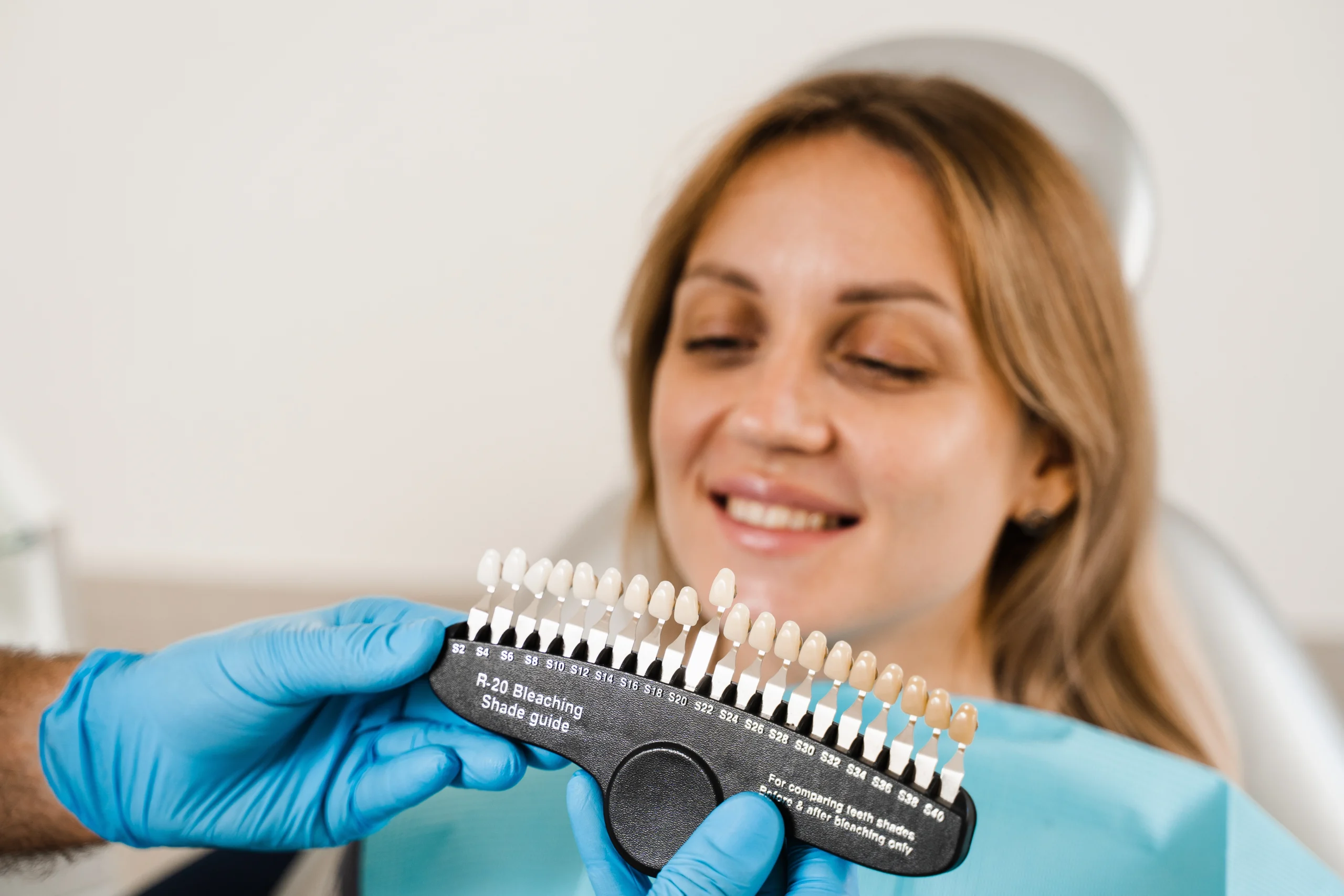
Professional teeth whitening uses higher concentrations of bleaching agents (typically hydrogen peroxide or carbamide peroxide) than over-the-counter products, delivering significantly better results. At our Canterbury practice on London Road, whitening is supervised by qualified dentists who assess whether you’re a suitable candidate and monitor your progress.
We offer two main approaches: home whitening using custom-fitted trays you wear for a few hours daily over 2-3 weeks, and in-surgery power whitening that delivers faster results in a single appointment. Both methods are safe for tooth enamel when used correctly under professional guidance, and results typically last 1-3 years with proper maintenance.
Why Professional Beats Over-the-Counter Products
Walk into any pharmacy and you’ll find dozens of products promising whiter teeth. Whitening strips, charcoal toothpastes, LED kits. So why choose professional whitening?
The concentration question:
Over-the-counter whitening products in the UK are legally limited to 0.1% hydrogen peroxide, so weak they produce minimal results even with prolonged use. Professional whitening uses concentrations up to 6% for home whitening and up to 38% for in-surgery treatments.
These higher concentrations actually work within timeframes that fit real life. Home whitening shows visible results within a week or two. In-surgery treatments brighten your smile in a single appointment.
Custom fit matters:
Shop-bought whitening kits come with one-size-fits-all trays that rarely fit anyone properly. Ill-fitting trays mean gel leaks onto gums (causing irritation), uneven application creates patchy results, you use far more gel than necessary, and the experience is uncomfortable enough that many people give up.
Our custom-fitted trays are made from impressions of your actual teeth. They hold gel precisely against tooth surfaces whilst protecting your gums. The difference in comfort and results is dramatic.
Professional assessment prevents disappointment:
Not everyone is a good candidate for whitening, and certain types of discolouration won’t respond well to bleaching. During your consultation at our Canterbury practice, we assess what’s causing your discolouration, whether whitening will work for your specific situation, what shade improvement is realistic, and whether other treatments might work better.
If whitening isn’t right for you, we’ll explain why and discuss alternatives like veneers or bonding that can achieve the results you want.
Safety under supervision:
Professional whitening carries minimal risks when done correctly. We check your teeth and gums are healthy before starting, ensure you’re using appropriate concentrations, and monitor for any sensitivity or adverse reactions.
Unregulated products (especially those bought online from overseas sellers) sometimes contain dangerous acid levels or illegally high peroxide concentrations that can permanently damage enamel. Professional supervision means safety isn’t left to chance.
Before diving into how whitening works, it helps to understand what you’re fighting against.
Extrinsic staining (surface discolouration):
These are the stains sitting on your tooth surface from tea and coffee (the biggest culprits in the UK), red wine, curry and other strongly coloured foods, tobacco use, and poor oral hygiene allowing plaque buildup.
Professional cleaning with our hygienist removes most extrinsic staining, often brightening your smile noticeably without any whitening treatment. If you haven’t had a hygiene appointment recently, we usually recommend starting there. You might be surprised how much difference it makes, and you’ll get better whitening results starting from a clean baseline.
Intrinsic discolouration (internal changes):
These occur inside the tooth structure: natural darkening as we age (enamel thins, revealing yellower dentine beneath), childhood exposure to tetracycline antibiotics or excess fluoride, trauma to teeth causing internal bleeding and darkening, root canal treatment leaving teeth grey, and genetics (some people naturally have darker dentine).
Intrinsic discolouration requires penetrating whitening to improve, and some types respond better than others. Grey discolouration is notoriously stubborn, whilst yellow tones typically whiten beautifully.
Why teeth yellow with age:
If you’ve noticed your teeth looking more yellow as you’ve got older, you’re not imagining it. Enamel naturally wears thinner over decades, and the dentine layer beneath is inherently more yellow. This is completely normal but one of the reasons professional whitening becomes more appealing to people in their 40s, 50s, and beyond who remember having whiter teeth in their youth.
We offer two professional whitening approaches, each with distinct advantages. Most Canterbury patients choose home whitening for the balance of cost, convenience, and control, but in-surgery whitening suits those wanting faster results.
This is what most dentists recommend. Your first appointment takes impressions of your teeth to create custom whitening trays. About a week later, your custom trays are ready. We show you how to apply the whitening gel (a tiny drop in each tooth compartment) and how to insert and remove the trays.
You’ll wear the trays for 1-2 hours daily, or overnight if using a weaker formula. Most people whiten whilst watching television in the evening or during their morning routine. Over 2-3 weeks, your teeth gradually brighten. You’ll notice visible change within 4-5 days, with maximum results around the 2-3 week mark.
Why this method works brilliantly: You control how white you want to go. Gradual change looks natural (people notice you look great but can’t quite put their finger on what’s changed). Minimal sensitivity because spreading whitening over weeks reduces discomfort dramatically. Long-term value because you keep your trays forever. Years later when results have faded, simply buy new gel syringes and do a few days of touch-up whitening.
The downsides: Requires compliance (you need to actually wear the trays consistently). It takes time (you need at least 2-3 weeks for full results).
Sometimes called “power whitening” or “laser whitening,” this approach delivers maximum brightness in a single appointment lasting 60-90 minutes. We apply high-concentration whitening gel to your teeth, protecting your gums with a barrier. A special light activates the gel for 15-20 minutes. We repeat this process 2-3 times within the appointment. You walk out with teeth several shades whiter than when you arrived.
When power whitening makes sense: Time pressure (event coming up and you need fast results), compliance concerns (you won’t wear trays at home), or instant gratification preference (some people just want it done and dusted in one go).
The reality check: More sensitivity (delivering all that whitening in one hit means more people experience temporary sensitivity afterwards). Higher cost (single-appointment convenience costs more). Less flexibility (whatever result you get is what you get). Still fades (results fade over time just like home whitening).
Honest recommendation: Home whitening produces excellent results with minimal sensitivity and better long-term value for most patients. But in-surgery whitening absolutely has its place for the right situations. During your consultation, we’ll discuss which approach fits your timeline, budget, and preferences.
We offer free consultations because choosing whitening shouldn’t feel pressured.
First, we examine your teeth and gums thoroughly. Whitening requires healthy teeth and gums (no untreated decay or gum disease), realistic expectations about results, and understanding that existing restorations won’t change colour.
If you have cavities, we’ll need to treat them first. Whitening gel can irritate exposed nerves in decayed teeth. If your gums are inflamed, we’ll recommend seeing our hygienist for treatment before whitening.
This is where managing expectations becomes crucial. Some patients arrive with photos of celebrities having impossibly white veneers, hoping whitening will match that shade. It won’t.
Natural teeth have limits to how white they can become. We can usually brighten teeth by 2-5 shades, which makes a noticeable, attractive difference. But there’s a point beyond which natural teeth won’t go without looking unnatural or grey.
We’ll show you a shade guide and assess your current colour. We’ll discuss what improvement is realistic for your teeth specifically. Yellow tones respond beautifully. Grey tones are stubborn. Brown discolouration sits somewhere in between.
We’ll walk through whichever whitening method you’re considering: timeline and commitment required, cost breakdown, what sensitivity you might experience, how to maintain results, and when touch-ups will be needed.
You’ll get honest answers to questions like “Will this work for me?” or “Is it worth the money?” Our job is helping you make an informed decision, not selling you treatment you don’t need.
Take time to think about it. Whitening is cosmetic, not urgent. Many patients book consultations just to understand their options, then return months later when timing suits them better. That’s absolutely fine.
You’ve invested time and money achieving your whiter smile. Here’s how to protect that investment.
Immediately after whitening (whether home or in-surgery), your enamel pores are still open and especially vulnerable to staining. Follow the “white diet” for 48 hours. Eat plain pasta and rice, white fish and chicken, potatoes, white bread, clear soups, dairy products, and water. Avoid tea, coffee, red wine, cola and dark sodas, tomato-based sauces, curry and heavily spiced foods, berries, soy sauce, balsamic vinegar, and smoking or vaping.
Yes, it’s restrictive. Yes, 48 hours feels long. But this waiting period significantly affects how well your results last.
After those first 48 hours, return to normal eating and drinking, but be strategic. Drink staining beverages through a straw when possible. Rinse with water after coffee or red wine. Don’t let staining liquids sit in your mouth. Use whitening toothpaste as your regular toothpaste (it won’t whiten further but helps prevent new staining). Attend hygiene appointments every six months for professional cleaning.
Results will gradually fade over 1-3 years. When you notice yellowing returning, touch-up whitening is straightforward if you did home whitening originally. Simply buy new gel syringes and wear your trays for 3-5 nights. This brings you back to your brightest shade quickly and inexpensively.
Most patients touch up once yearly or every 18 months. It becomes an easy part of your routine.
Home whitening: £[price] including custom trays, initial gel syringes, and all appointments. You keep the trays, so future touch-ups just require buying new gel syringes at £[price per syringe].
In-surgery power whitening: £[price] for a single session, sometimes with a take-home kit included for touch-ups.
Interest-free payment plans available to spread the cost over several months if that helps make treatment more affordable.
Call 01227 765 851 for current pricing and to discuss payment options.
We take the time to understand your medical history, assess your dental health, and create a treatment plan that works for your budget and timeline. Your smile is your story, and every story deserves individual attention.
Dr Banvir's MSc in Aesthetic & Restorative Dentistry represents specialist-level training you'd typically need referrals to access. His three years working in Maxillo-Facial Surgery means he's handled complex cases most general dentists never see.
Digital X-rays with minimal radiation. Intraoral cameras so you can see exactly what we're seeing. Comprehensive record-keeping that tracks changes over time. We invest in technology because it genuinely improves your experience and treatment outcomes.
Generations of Canterbury families have trusted us with their dental health. That kind of loyalty doesn't come from flashy marketing. It comes from delivering quality care consistently over decades.
Dental anxiety is far more common than you think. We work at your pace, explain everything before we begin, and create an environment where you feel in control. Many of our most nervous patients now attend regular check-ups without that familiar dread.
Looking for a dentist you can actually stick with?
Registering with A1 Dental Surgery means your care is planned properly, explained clearly, and delivered consistently over years. Not patched together across disconnected appointments at different practices.
Your first visit focuses on understanding your story. We assess your dental health, discuss your goals and concerns, and map out a realistic treatment plan that respects both your timeline and budget.
What registration means:
Yes, when supervised by a dentist. Decades of research confirm that professional whitening doesn't damage tooth enamel when used correctly.
The main side effect is temporary tooth sensitivity, affecting about 60% of people to varying degrees. This resolves completely once whitening is finished and can be managed with desensitising toothpaste during treatment.
Some patients experience mild gum irritation if gel contacts soft tissue. Custom-fitted trays minimise this risk dramatically compared to ill-fitting shop-bought alternatives.
What isn't safe is buying unregulated products online from overseas sellers. Some contain dangerous acid levels or illegally high peroxide concentrations that can permanently damage enamel.
Most people's teeth brighten by 2-5 shades with professional whitening. The exact improvement depends on your starting shade (darker teeth often see more dramatic change), the type of discolouration (yellow responds better than grey), your natural tooth colour (everyone has a "whitest possible" point), which whitening method you choose, and how long you whiten for.
During your consultation, we'll give you a realistic assessment of what's achievable for your teeth specifically. One patient's results won't match another's because everyone's teeth are different.
Typically 1-3 years, depending on your habits. Results fade gradually over time as new staining accumulates from tea, coffee, and red wine consumption, smoking or vaping, heavily coloured foods, and natural ageing processes.
You can extend results by using whitening toothpaste for maintenance, drinking staining beverages through a straw, rinsing your mouth after consuming staining foods or drinks, and attending regular hygiene appointments.
When results have faded, touch-up whitening is simple if you did home whitening. Just buy new gel and wear your trays for a few nights. Most patients touch up every 12-18 months.
No. Whitening only affects natural tooth enamel. Crowns, veneers, bonding, and fillings stay the same colour regardless of how much you whiten.
This creates a potential issue: if you have a front filling that currently matches your natural teeth, whitening will make your natural teeth lighter whilst the filling stays the same shade. Now the filling looks dark by comparison.
We discuss this during consultations. Sometimes it means replacing visible fillings after whitening to match your new shade. Other times it means accepting a slight mismatch in less visible areas. Occasionally it means whitening isn't the best choice if you have extensive front restorations.
Home whitening at A1 Dental Surgery costs £[price] including custom trays, initial gel syringes, and all appointments. You keep the trays, so future touch-ups just require buying new gel syringes at £[price per syringe].
In-surgery power whitening costs £[price] for a single session.
We offer interest-free payment plans to spread the cost over several months.
Call 01227 765 851 for current pricing and to discuss payment options.
Whitening gel temporarily opens tiny pores in your enamel to reach discolouration beneath. Whilst these pores are open, teeth become more permeable to temperature changes, causing that sharp sensitivity to cold drinks or cold air.
The pores close naturally within 24-48 hours after each whitening session, and sensitivity resolves completely once you finish treatment. It's uncomfortable but temporary and harmless.
To minimise sensitivity: use desensitising toothpaste for two weeks before starting whitening, continue desensitising toothpaste throughout treatment, reduce wearing time, take breaks if sensitivity becomes bothersome, and avoid very cold foods and drinks during the whitening period.
Usually yes, with modifications. We might recommend using a lower concentration gel that requires longer wearing time but causes less sensitivity, whitening every other day instead of daily, building up with desensitising toothpaste for 3-4 weeks before starting, or shorter wearing times initially, gradually increasing as teeth adapt.
Some patients with severe sensitivity aren't good candidates for whitening. We'll assess your situation honestly during consultation.
Here's the reality: if they're legal in the UK, they contain such low peroxide concentrations (0.1%) that they barely work. If they promise amazing results, they're either illegal or being sold from overseas where regulations differ.
Complications from unregulated kits include chemical burns to gums, permanent enamel damage from acidic formulations, patchy uneven results, and wasted money on products that simply don't work.
Professional whitening costs more because you're paying for custom-fitted trays that actually work properly, appropriate concentrations that deliver results safely, professional supervision catching problems early, assurance you're a suitable candidate before spending money, and results that actually meet your expectations.
With home whitening, you'll notice visible change within 4-5 days, with maximum results around the 2-3 week mark. With in-surgery power whitening, you walk out with teeth several shades whiter immediately.
The gradual improvement with home whitening is actually an advantage. People notice you look great but can't quite put their finger on what's changed. Sudden dramatic whitening can feel obvious.
We generally recommend postponing whitening until after pregnancy and breastfeeding. Whilst there's no evidence that whitening harms babies, there's also no research confirming it's completely safe. Given whitening is cosmetic and can wait, it's prudent to delay.
Our practice is centrally located on London Road in Canterbury (near Canterbury East Station with on-site parking), making us easily accessible when you're ready to start treatment, whether you're local or travelling from Deal, Dover, or Ramsgate.