Can Invisalign Fix All Types of Teeth Issues?
If you’re considering Invisalign to straighten your teeth, one of your first questions is probably whether it can actually fix your specific dental problem.
It’s a sensible question. Invisalign has become incredibly popular over the past decade, but that doesn’t mean it works for every type of teeth misalignment. Understanding what Invisalign can and cannot fix will help you make an informed decision about your orthodontic treatment.
The good news is that Invisalign technology has advanced significantly since it was first introduced. Modern Invisalign can treat a much wider range of dental issues than earlier versions could. Many cases that previously required traditional braces can now be successfully treated with clear aligners.
However, Invisalign does have limitations. Some very complex cases, severe bite problems, or specific tooth movements still work better with traditional braces.
In this guide, we’ll explore exactly which dental issues Invisalign can fix, which cases it struggles with, and how to know whether Invisalign is suitable for your particular situation.
What Dental Issues Can Invisalign Fix?
Invisalign works brilliantly for most common orthodontic problems. Here’s what clear aligners can successfully treat:
Crowded Teeth
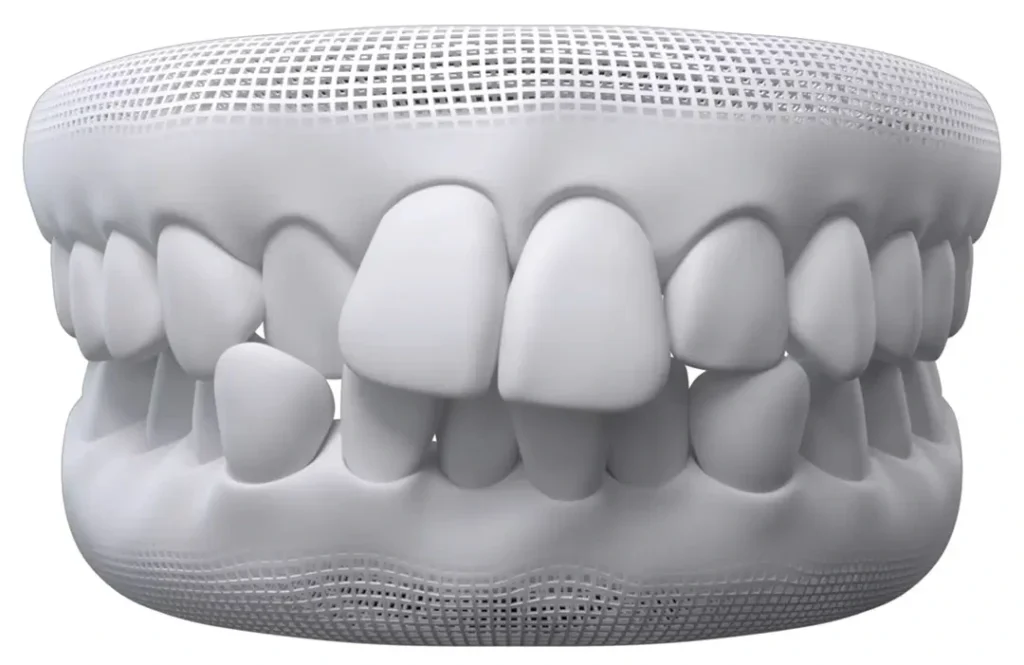
Crowded teeth happen when there’s not enough space in your jaw for all your teeth to fit properly. Teeth overlap, twist, or push forward trying to find room.
Invisalign can fix mild to moderate crowding very effectively. The aligners gradually widen your dental arch and rotate teeth into better positions, creating the space needed for proper alignment.
For moderate crowding, your Invisalign treatment might include a technique called IPR (interproximal reduction), where tiny amounts of enamel are carefully removed between teeth to create space. This is safe, painless, and allows teeth to move into alignment without extractions.
At A1 Dental Surgery, we’ve treated hundreds of crowding cases with Invisalign, achieving excellent results. Treatment typically takes 12-18 months for moderate crowding.
Invisalign works best for crowding when: The crowding is mild to moderate, teeth need to rotate less than 45 degrees, and your jaw structure can accommodate slight arch expansion.
Gaps and Spacing
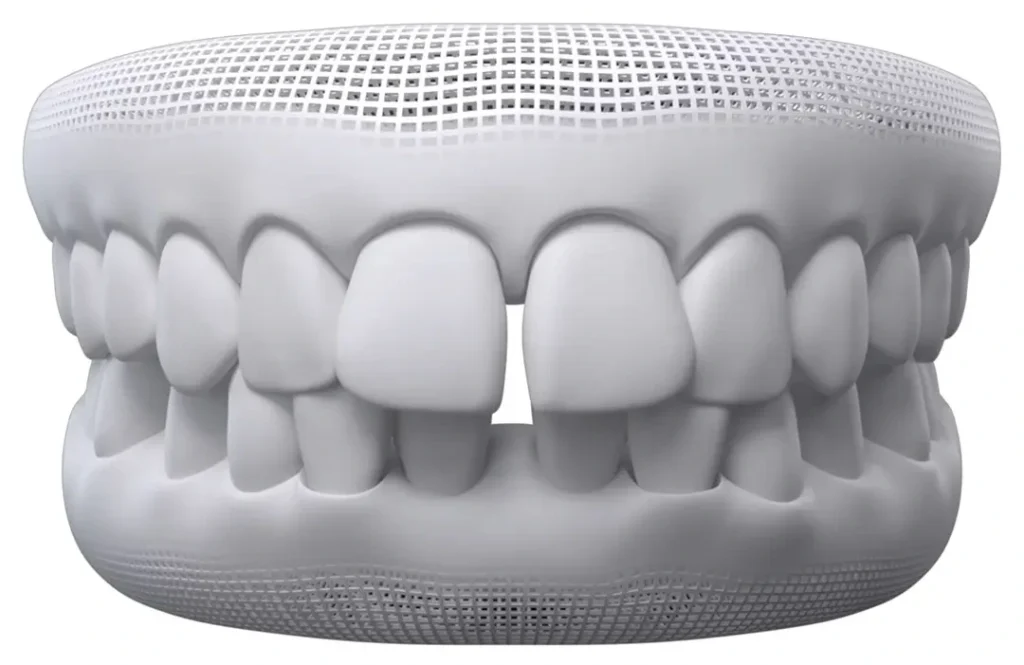
Gaps between teeth (diastema) are one of the easiest issues for Invisalign to fix. Whether you have a gap between your front teeth or multiple spaces throughout your smile, clear aligners can close these effectively.
Invisalign gradually moves teeth together, closing spaces evenly and creating a more unified smile. The aligners apply gentle, consistent pressure that brings teeth into contact over several months.
Small gaps (1-3mm) usually close quite quickly, often within 6-10 months. Larger gaps take longer but still respond well to Invisalign treatment.
Invisalign works best for gaps when: The gaps aren’t caused by missing teeth, you don’t have significant bite problems, and the gaps are less than 6mm wide.
Overbite (Deep Bite)
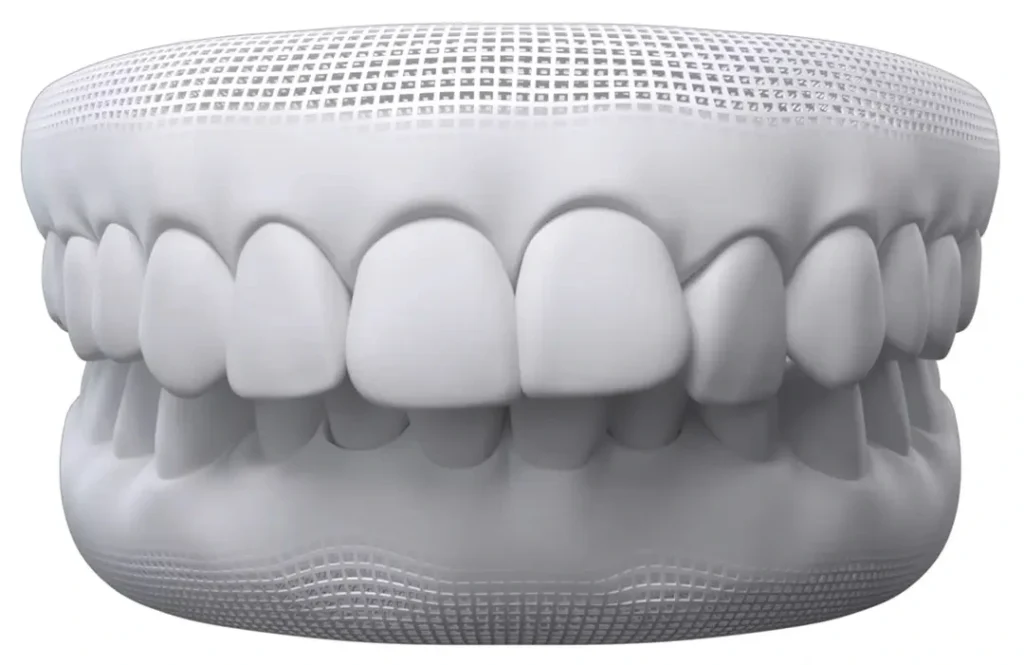
An overbite occurs when your top front teeth overlap your bottom teeth too much vertically. A small overbite is normal (2-3mm), but when top teeth cover most or all of the bottom teeth, it can cause problems.
Invisalign can correct mild to moderate overbites by:
- Moving upper teeth backward
- Moving lower teeth forward
- Intruding (pushing up) upper front teeth
- Extruding (pulling down) back teeth to open the bite
Treatment often involves elastic attachments (small tooth-coloured bumps) bonded to teeth to give aligners better grip for these movements.
At A1 Dental Surgery, Dr Banvir successfully treats overbite cases with Invisalign regularly. Treatment typically takes 15-24 months depending on severity.
Invisalign works best for overbites when: The overbite is primarily dental (not skeletal), the overlap is less than 6-7mm, and you don’t have severe jaw discrepancies.
Underbite
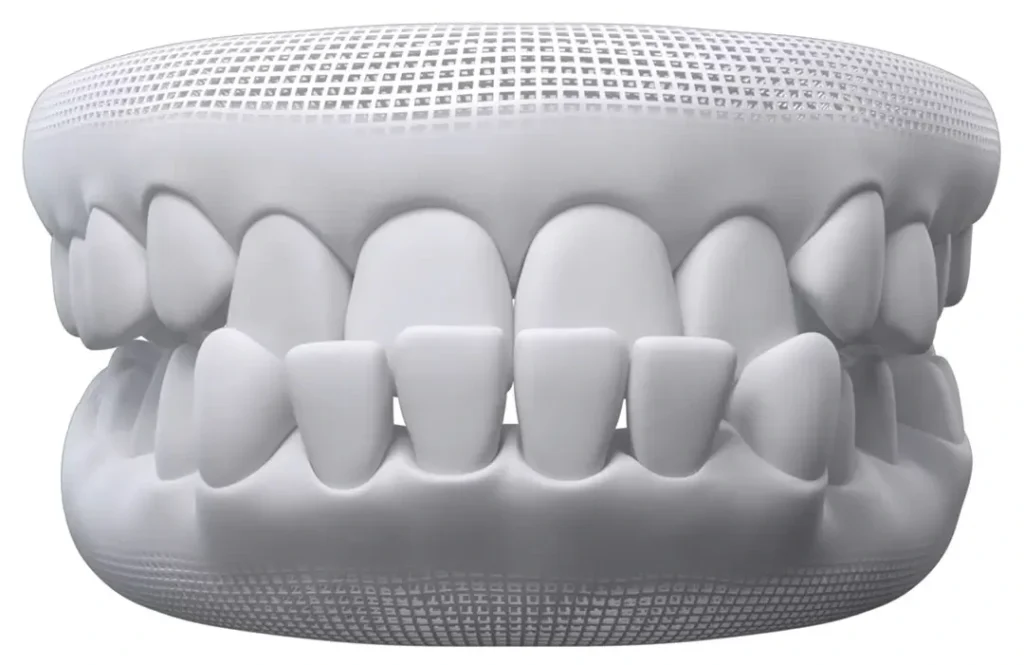
An underbite happens when your lower front teeth sit in front of your upper front teeth. This can affect your ability to bite and chew properly.
Invisalign can treat mild to moderate underbites by moving upper teeth forward and/or lower teeth backward. More complex underbite cases might require a combination of Invisalign and other treatments.
Underbite correction with Invisalign often takes longer than other issues because it involves significant tooth movement and bite adjustment. Expect 18-30 months of treatment.
Invisalign works best for underbites when: The underbite is primarily dental rather than skeletal, the discrepancy is mild (less than 2-3mm), and you don’t have severe jaw misalignment.
Crossbite
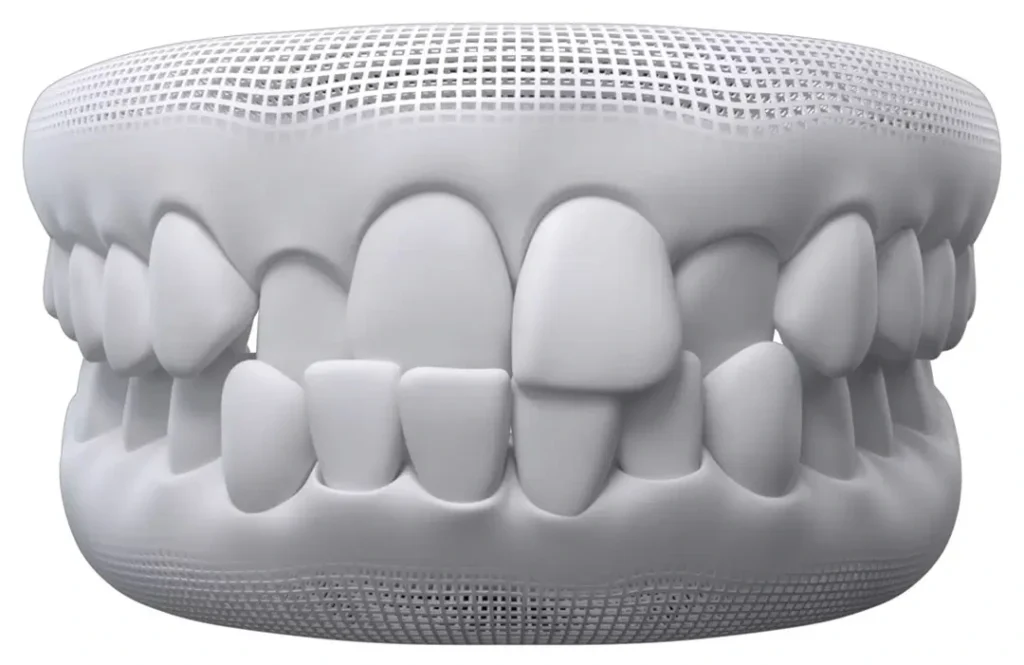
A crossbite occurs when some upper teeth sit inside lower teeth instead of outside them. This can happen on one or both sides of your mouth and can affect front or back teeth.
Invisalign treats crossbites effectively by:
- Expanding the upper arch
- Tilting teeth into proper position
- Coordinating upper and lower jaw alignment
Crossbite correction is one of Invisalign’s strengths. The aligners can apply precise, controlled force to tip teeth into correct positions.
Invisalign works best for crossbites when: The crossbite affects individual teeth rather than full sides of the mouth, you don’t have severe skeletal discrepancies, and expansion needs are moderate.
Open Bite
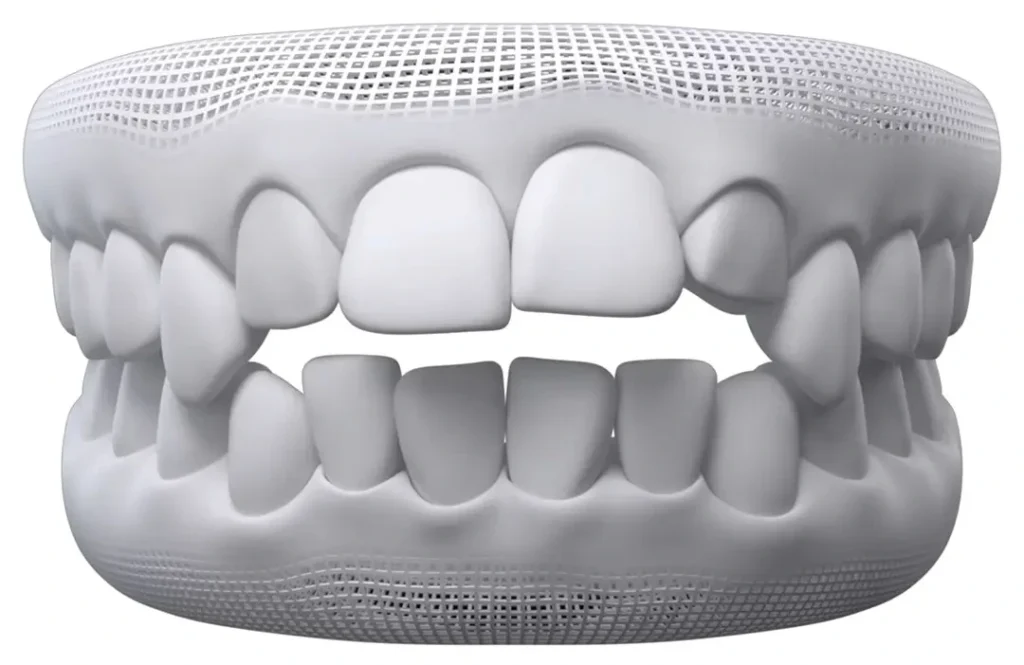
An open bite means your front teeth don’t touch when you bite down, leaving a vertical gap. This can make biting into food difficult and may affect speech.
Invisalign can treat mild to moderate open bites by:
- Intruding back teeth (pushing them up into the jaw)
- Extruding front teeth (pulling them down)
- Changing the angle of front teeth
Open bite cases often require excellent patient compliance because successful treatment depends on wearing aligners correctly.
Invisalign works best for open bites when: The open bite is mild (less than 3-4mm gap), it’s primarily dental rather than skeletal, and it’s not caused by tongue thrusting habits.
What Invisalign Struggles to Fix
While Invisalign has improved dramatically over the years, there are still some cases where traditional braces work better:
Severe Crowding Requiring Extractions
When crowding is so severe that teeth need to be extracted to create space, traditional braces often work better than Invisalign.
Closing large extraction spaces (where a tooth has been removed) requires moving teeth significant distances. While Invisalign can do this, braces often achieve better root control and more predictable results for these movements.
If your case requires extracting multiple teeth, your dentist might recommend braces or a combination of braces for some phases and Invisalign for finishing.
Severely Rotated Teeth
Teeth that are rotated more than 45 degrees are challenging for Invisalign. While aligners can rotate teeth somewhat effectively, severely twisted teeth (especially round teeth like canines) don’t have enough surface area for aligners to grip effectively.
Traditional braces attach directly to each tooth with brackets, giving much better control for rotating severely twisted teeth into alignment.
Large Vertical Movements
Moving teeth significantly up or down in the jaw (extrusion or intrusion) is more difficult with Invisalign than with braces.
While Invisalign can handle small vertical adjustments (1-2mm), moving teeth 3-4mm vertically works better with braces. The fixed attachments of braces provide better control for these vertical movements.
Severe Skeletal Discrepancies
If your bite problem is caused by your jaw size or position (skeletal issues) rather than just tooth position (dental issues), Invisalign alone might not be sufficient.
Severe underbites, overbites, or crossbites caused by jaw structure problems might require:
- Jaw surgery (orthognathic surgery) combined with orthodontics
- Traditional braces for better control during complex movements
- A combination of treatments
At A1 Dental Surgery, we’ll assess whether your case is primarily dental (Invisalign can work) or skeletal (might need alternative treatment).
Midline Shifts Greater Than 3mm
The midline is the center line between your front teeth. If your upper and lower midlines are misaligned by more than 3mm, this can be challenging for Invisalign to correct.
Small midline discrepancies (1-2mm) correct well with Invisalign. Larger shifts often need the more powerful, continuous force that braces provide.
Severely Tipped Teeth
Teeth that are tipped forward or backward at extreme angles can be difficult for Invisalign to upright. The aligners apply force to the crown (visible part) of teeth, but severely tipped teeth need force applied to roots as well.
Braces can attach hooks and elastics that apply force in multiple directions simultaneously, giving better control for uprighting severely tipped teeth.
How Invisalign Technology Has Improved
If you researched Invisalign several years ago and were told it couldn’t fix your issue, it’s worth investigating again. Recent advances include:
SmartTrack material: The current aligner material is 75% more effective at controlling tooth movement than original Invisalign material.
SmartForce attachments: Small tooth-coloured buttons bonded to teeth give aligners better grip for complex movements like rotation, extrusion, and bite correction.
Precision cuts: Strategic cuts in aligner edges help apply force more precisely to specific teeth.
Bite ramps: Built-in ridges that help correct overbites by preventing teeth from fully closing.
Power ridges: Features molded into aligners to help with difficult movements.
These innovations mean Invisalign can now successfully treat many cases that previously required braces.
How to Know If Invisalign Will Work for You
The only way to know definitively whether Invisalign can fix your teeth is to have a consultation with an experienced Invisalign provider.
During your consultation at A1 Dental Surgery, we’ll:
Examine your teeth and bite to understand what needs correction. We’ll look at crowding, spacing, bite relationship, tooth angulation, and any other issues.
Take 3D scans of your teeth using our iTero scanner. This creates a precise digital model that shows exactly how your teeth are positioned.
Create a treatment simulation showing you how Invisalign would move your teeth from start to finish. You’ll see a preview of your expected results before committing to treatment.
Discuss whether Invisalign is suitable or whether another treatment would work better for your case. We offer both Invisalign and traditional braces, so we’ll recommend whichever gives you better results.
Explain treatment duration and what to expect during the process.
Provide clear pricing with no hidden fees.
Most importantly, we’ll give you honest advice. If Invisalign can’t adequately fix your issue, we’ll tell you. If it can work but might take longer than braces, we’ll explain the tradeoffs.
Success Rates for Different Issues
Research shows Invisalign’s success rates vary by condition:
Gaps and spacing: 95%+ success rate. This is what Invisalign does best.
Mild to moderate crowding: 90%+ success rate with proper planning and patient compliance.
Overbite correction: 80-85% success rate for mild to moderate cases.
Crossbite correction: 85-90% success rate, one of Invisalign’s strengths.
Rotation of teeth: 75-80% success rate, varies by tooth shape and rotation degree.
Underbite correction: 70-75% success rate for mild cases; severe cases often need braces or surgery.
Open bite correction: 65-75% success rate, dependent on cause and patient compliance.
These statistics show that Invisalign works very well for most common issues but has limitations for certain complex movements.
When to Choose Traditional Braces Instead
Traditional braces remain the gold standard for:
- Very complex cases with multiple simultaneous issues
- Severe crowding requiring tooth extractions
- Teeth rotated more than 45 degrees
- Significant vertical tooth movements (more than 2-3mm)
- Severe bite problems caused by jaw structure
- Cases where patient compliance might be questionable
- Teenagers who might lose or not wear aligners consistently
At A1 Dental Surgery, we don’t favour one treatment over another. We recommend what will give you the best results. Some patients need braces, others are perfect for Invisalign, and some could use either successfully.
Combination Treatments
Sometimes the best approach combines different treatments:
Braces first, Invisalign to finish: Complex movements done with braces (6-12 months), then switched to Invisalign for final refinements and aesthetics during the final phase.
Invisalign with auxiliaries: Invisalign combined with temporary anchorage devices (TADs), elastics, or other aids to achieve complex movements.
Phased treatment: Address severe issues with braces, then maintain or refine results with Invisalign retainers.
Surgery and Invisalign: For severe skeletal problems, jaw surgery followed by Invisalign to fine-tune tooth positions.
Dr Banvir will discuss combination approaches if they would benefit your case.
The Importance of Experience
An experienced Invisalign provider can often treat cases with clear aligners that less experienced providers would refer to traditional braces.
Dr Somitra Banvir has been providing Invisalign treatment at A1 Dental Surgery since 2012 and has completed advanced Invisalign training. This experience means we can:
- Predict which cases will work well with Invisalign
- Plan complex tooth movements effectively
- Use advanced techniques like IPR and attachments strategically
- Modify treatment plans if teeth don’t respond as expected
- Achieve results that maximize Invisalign’s capabilities
Experience matters when determining whether Invisalign can fix your particular issue.
What Happens If Your Case Isn’t Suitable?
If Invisalign isn’t appropriate for your case, you have several options:
Traditional metal braces: Work for any level of complexity, typically cost £1,500-£4,500 depending on treatment length.
Ceramic braces: Tooth-coloured brackets that are less visible than metal but work the same way, costing £2,000-£5,500.
Lingual braces: Brackets attached to the back of teeth (completely hidden), costing £5,000-£8,000.
Partial treatment: Sometimes Invisalign can improve your smile aesthetically even if it can’t achieve perfect orthodontic alignment.
We’ll discuss all appropriate options during your consultation.
Can Invisalign fix severely crooked teeth?
Invisalign can fix moderately crooked teeth very effectively. Severely crooked teeth (rotated more than 45 degrees or requiring extractions) might need traditional braces for better results, though modern Invisalign technology handles more severe cases than it could previously.
Can Invisalign close big gaps?
Yes, Invisalign closes gaps very effectively. It can close gaps up to 6mm reliably. Larger gaps can be closed but treatment takes longer. Very large gaps (where teeth are missing) might need additional treatments like implants or bridges.
Can Invisalign fix an overbite without surgery?
Yes, mild to moderate overbites (2-6mm of overlap) can be corrected with Invisalign alone. Severe overbites (more than 6-7mm) or those caused by jaw structure might need jaw surgery combined with orthodontic treatment for best results.
Can Invisalign fix a crossbite?
Yes, crossbite is one of the issues Invisalign corrects very successfully. Both front and back crossbites typically respond well to clear aligner treatment, often better than some other bite problems.
How do I know if I’m a good candidate for Invisalign?
You’re likely a good candidate if you have mild to moderate crowding, gaps, overbite, underbite, crossbite, or open bite, your teeth aren’t severely rotated, you’re willing to wear aligners 20-22 hours daily, and you want a more aesthetic option than braces. A consultation will confirm your suitability.
Can Invisalign fix teeth without attachments?
Simple cases (mild crowding or small gaps) might not need attachments. Most cases use some attachments because they significantly improve Invisalign’s ability to control tooth movement. Attachments are small, tooth-coloured, and barely noticeable.
Can Invisalign fix bottom teeth only?
Treating only bottom teeth isn’t usually recommended because your bite wouldn’t be corrected properly. Most cases need both upper and lower teeth treated to achieve a functional, stable bite. In rare cosmetic-only cases, single-arch treatment might be acceptable.
What if Invisalign doesn’t work for my teeth?
If you’re not suitable for Invisalign, traditional braces remain an excellent option that can fix any orthodontic problem. We’ll discuss alternative treatments during your consultation and recommend what will give you the best results.
Find Out If Invisalign Can Fix Your Teeth
The best way to know whether Invisalign will work for your specific dental issues is to have a consultation with an experienced provider.
At A1 Dental Surgery in Canterbury, we offer complimentary Invisalign consultations where we’ll assess your teeth, show you a digital preview of your potential results, and give you honest advice about whether Invisalign is suitable.
We’ve been providing Invisalign treatment to patients across Canterbury, Whitstable, Herne Bay, Deal, Dover, and East Kent since 2012. We’ll tell you if Invisalign can fix your teeth or recommend a better alternative if needed.
Call our team on 01227 765 851 or visit us at 52 London Road, Canterbury, Kent CT2 8LF to book your complimentary consultation.
Serving patients across East Kent: Canterbury, Whitstable, Herne Bay, Faversham, Deal, Dover, Ashford, Ramsgate, Margate, and surrounding areas.