The packet of adhesive has been sitting in the bathroom cabinet for three years. Every morning, the same routine: press, wait, hope. Some days it holds. Some days, halfway through lunch at a café on St Peter’s Street, it doesn’t.
If that sounds familiar, you’re not alone. Missing teeth, whether one or several affect far more Canterbury residents than most people admit. The question isn’t whether to do something about it. It’s which option is actually worth it for your mouth, your life, and your budget.
Dental implants and dentures are the two most common solutions for replacing missing teeth, and they work very differently. At A1 Dental Surgery on London Road, Canterbury, Dr Somitra Banvir has been helping patients across East Kent navigate exactly this decision for nearly 20 years. The advice is always the same: there’s no universal right answer, but there is a right answer for you.
What Are Your Actual Options for Replacing Missing Teeth?
Before comparing the two, it’s worth being clear about what each involves because “dentures” and “implants” both cover a range of solutions.
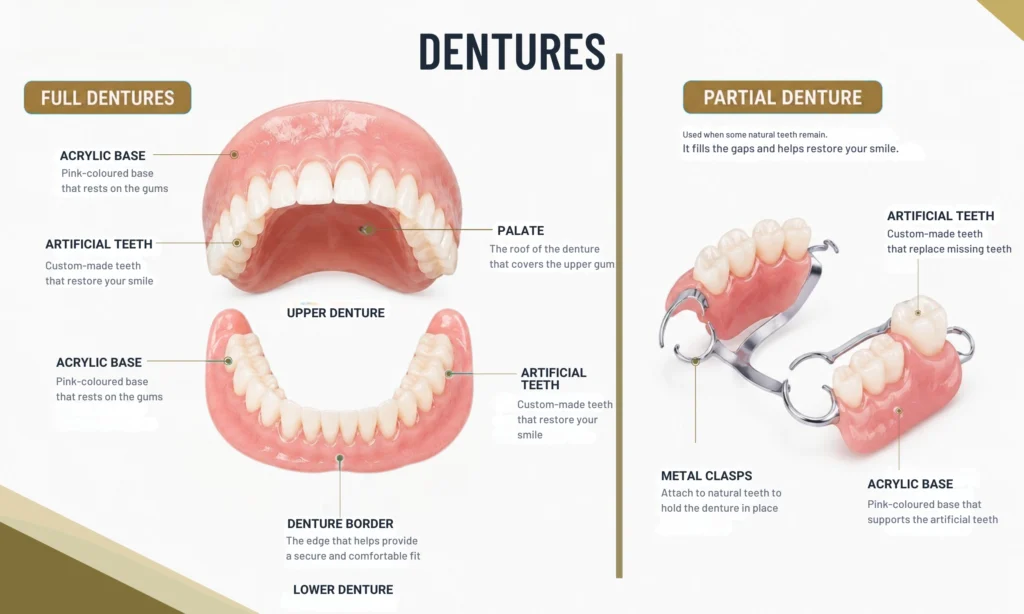
Dentures are removable prosthetic teeth. Full dentures replace an entire arch; partial dentures replace several missing teeth while your remaining natural teeth stay in place. They sit on the gum and are held in place by suction, the shape of your jaw, or dental adhesive. Modern dentures are better than they’ve ever been; lighter, more natural-looking, and better fitting than the ones your grandparents knew.
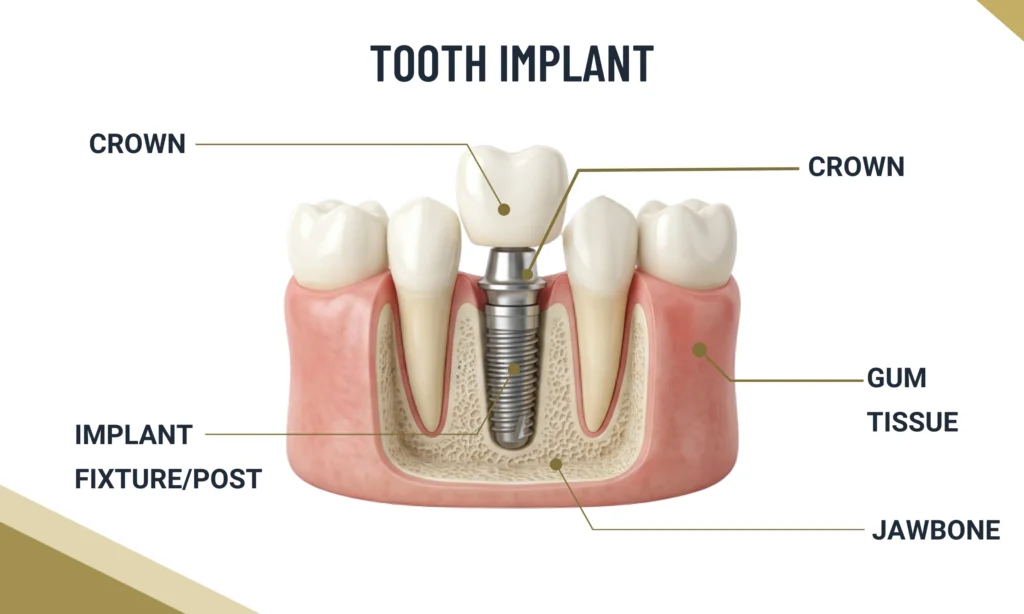
Dental implants are titanium posts placed surgically into the jawbone, onto which a crown, bridge, or denture is fixed. The implant itself replaces the tooth root. Once integrated with the bone, a process that takes three to six months; the restoration on top feels and functions like a natural tooth.
There’s also a third option worth knowing about: implant-supported dentures, which combine both approaches and are worth understanding before you decide.
Dental Implants vs Dentures: The Honest Comparison
Comfort and Daily Life
This is where implants and dentures part company most dramatically.
Dentures require adaptation. Most patients manage well within a few weeks, but eating certain foods particularly hard or chewy things always requires more thought. Speech can be affected initially. And for some patients, even well-fitted dentures shift slightly over time as the jawbone beneath them changes shape.
Implants, once fully healed, require no adaptation at all. You brush them, you eat with them, you forget about them. Patients who’ve moved from dentures to implants consistently describe the change as significant not because dentures are terrible, but because implants simply remove the mental overhead.
If you’re driving in from Whitstable or Herne Bay for a full day in Canterbury, the last thing you want is to be thinking about your teeth.
How Long Do They Last?
Dental implants, with good oral hygiene and regular check-ups, can last 20 to 30 years and in many cases, for life. The implant itself integrates with the bone permanently; the crown on top may need replacing after 15 years or so, but the implant post often doesn’t.
Dentures typically need relining or replacing every five to ten years. As the jawbone naturally resorbs (shrinks) after tooth loss, the fit of a denture changes. This is a predictable process, not a failure but it does mean ongoing cost and adjustment appointments.
If you’re in your 50s and comparing costs, a single dental implant placed now might genuinely be the last time you deal with that tooth.
The Bone Loss Factor; Why It Matters More Than Most People Realise
Here’s the part of this conversation that often surprises patients.
When a tooth root is lost, the jawbone beneath it begins to resorb; gradually reducing in height and width. This is why long-term denture wearers often develop a sunken facial appearance around the mouth. The bone is responding to the absence of stimulation.
Dental implants are the only tooth replacement option that prevents bone loss, because they transmit chewing forces into the jawbone the same way a natural root does. For younger patients in particular or anyone planning to wear the same replacement for decades, this is an important clinical consideration, not just an aesthetic one.
Are dental implants better than dentures at A1 Dental Surgery Canterbury?
Both have merits depending on your situation. Implants are fixed, stable, and feel like natural teeth, they also prevent bone loss. Dentures are removable, require no surgery, and suit patients where implants may not be clinically appropriate. At A1 Dental Surgery, Dr Banvir will assess your specific case and recommend the best option for your health, lifestyle, and budget.
What Does Each Option Actually Cost in Canterbury?
Cost is usually the first thing people ask about, and it deserves a straight answer.
Dentures are the lower upfront investment. A quality partial or full denture made by a reputable dental laboratory costs considerably less than a dental implant. On the NHS, dentures are available at Band 3 charges. Privately, costs vary depending on the materials and the complexity of the case.
Dental implants at A1 Dental Surgery Canterbury start from £2,189 per implant, covering the implant placement, the abutment, and the crown. For multiple missing teeth, the cost increases accordingly though implant-supported bridges can replace several teeth without an implant for every single one.
The important context: that upfront cost comparison looks different when you extend the timeline.
A denture replaced twice in 20 years, with adjustment appointments, adhesive, and cleaning products, adds up. An implant placed once and maintained with regular hygiene visits is a different kind of investment; front-loaded, but often the more cost-effective option across a decade or more.
0% finance is available at A1 Dental Surgery for amounts up to £1,500, which can make starting a treatment plan more manageable for patients who don’t want to pay the full cost upfront.
How much more expensive are implants than dentures in Canterbury?
Dental implants at A1 Dental Surgery start from £2,189 per implant. A full set of quality dentures can cost significantly less upfront. However, implants typically last 20 to 30 years or longer with good care, while dentures usually need replacement every 5 to 10 years and ongoing adjustments as bone changes. Over a lifetime, the costs often become comparable.
Who Is Each Option Best For?
Dental Implants Suit Patients Who:
- Have one or more missing teeth and want a permanent, fixed solution
- Are in good general health with adequate jawbone density
- Are non-smokers, or willing to stop smoking before and during healing
- Want to avoid dietary restrictions and adhesive dependency
- Are making a long-term investment in their dental health
If you’ve read our post on whether you’re too old for dental implants, you’ll know that age alone is rarely the deciding factor. Health and bone quality matter far more than the number on your birthday cake.
Dentures Suit Patients Who:
- Need to replace multiple teeth across a full arch
- Have medical conditions that make surgery inadvisable
- Prefer an immediate solution without a surgical healing period
- Are working within a tighter upfront budget
- Have experienced significant bone loss that would require extensive grafting first
The honest answer is that neither option is objectively superior. The right choice depends on your clinical situation, your life, and your priorities. That’s exactly the conversation you’d have with Dr Banvir at a consultation.
The Third Option: Implant-Supported Dentures
This is worth its own section because it changes the calculation for many patients particularly those replacing most or all of their teeth.
Implant-supported dentures (sometimes called implant-retained dentures or “snap-on dentures”) use two to four implants as anchors for a denture that clicks securely onto them. The denture is still removable for cleaning, but during the day it stays completely stable; no adhesive, no movement, no anxiety about laughing at a family dinner in Faversham.
This option is significantly less expensive than replacing every single tooth with an individual implant, while delivering stability that a conventional denture simply can’t match. For patients who’ve been managing with loose full dentures, the difference is substantial.
Can I have implant-supported dentures at A1 Dental Surgery Canterbury?
Yes. Implant-retained dentures combine the benefits of both options, the stability of implants with the cost efficiency of denture-based restorations. They click securely onto implants, eliminating movement and adhesive dependency. This is an excellent option for patients replacing an entire arch of teeth.
What Does the Process Look Like at A1 Dental Surgery?
For implants, the journey starts with a consultation and assessment including x-rays to evaluate bone quality and volume at the implant sites. If adequate bone is present, the implant is placed under local anaesthetic in a procedure most patients describe as more straightforward than they anticipated.
Healing and osseointegration (the process by which bone grows around the implant) takes three to six months. During this time, a temporary restoration keeps things looking and functioning normally. Once the implant is fully integrated, the permanent crown or bridge is fitted.
You can read more about what dental implants feel like once they’re in place, it addresses the question most patients are really asking but don’t always voice directly.
For patients travelling from Ramsgate, Deal, or Dover, the appointment schedule is designed to minimise unnecessary trips. Most of the process requires only a handful of visits to our London Road practice.
Maintaining Your Investment Long-Term
Whichever option you choose, maintenance matters. Dentures need daily cleaning with a soft brush and denture cleaner, and should be removed at night to allow the gum tissue to rest. Regular dental check-ups ensure the fit is monitored as the jawbone changes over time.
Implants require the same care as natural teeth: twice-daily brushing, interdental cleaning, and regular professional hygiene appointments. Peri-implantitis (infection around an implant) is the primary cause of late implant failure and it’s largely preventable with good home care and professional monitoring. Our dental implant maintenance guide covers exactly what this looks like in practice.
Both options benefit from the same thing: a good relationship with your dental practice and consistent check-ups. For patients registered at A1 Dental Surgery in Canterbury, that’s built into the treatment from day one.
A Note on Dental Implant Costs and Finance
A question that comes up regularly in consultation: does the upfront cost of implants make them inaccessible for most patients?
The full picture on how much dental implants cost including what affects the price and what finance options exist is covered in detail in that post. The short version: 0% finance options and staged payment plans mean that the full cost doesn’t have to land in one go.
Ready to Work Out Which Option Is Right for You?
The best way to make this decision with confidence is to have someone look at your mouth, understand your history, and talk through what’s actually possible.
At A1 Dental Surgery, 52 London Road, Canterbury, Kent CT2 8LF, consultations for both dental implants and denture options are available with Dr Somitra Banvir. Call the practice on 01227 765 851 or visit a1dentalsurgery.co.uk to book. Whether you’re coming from Canterbury city centre or making the drive from further across East Kent, the conversation starts with no obligation and no assumptions, just an honest assessment of your best options.